It may seem counterintuitive, but many business leaders focus too much on business results. Wise leaders balance the pursuit of results with capabilities. Can you name any endeavor—rock-climbing, martial arts, chess—where champions didn’t first build their capabilities? Their victories (results) came later. When you see a leader fixated on quarterly results, picture an amateur climber at the base of El Capitan. He has the wrong shoes, no climbing skills and flabby abs… in other words, no capabilities. But boy oh boy, is he ever eager to climb. Yes, he wants results.
More in video, Leader’s Guide to B2B Organic Growth series, Video Lesson #9
We asked this question of 540 B2B professionals—with over 10,000 years of combined experience. Of 24 possible growth drivers, what were they most eager to improve? Market insight. We defined this as “Obtain market insight proactively to drive strategic decisions (vs. being just customer-reactive).” Just as quality and productivity each had their waves of popularity, so market insight is increasingly sought today. Here’s a short video on one way to succeed: Focusing the fuzzy front-end of B2B product development.
More in research report, What Drives B2B Organic Growth?
I hear this all the time: “We just finished trimming our costs, and now it’s time to grow.” Another variation: “Our last CEO focused on operational efficiency, but our new CEO wants growth.” This is nuts. If you run a business, B2B organic growth isn’t an initiative. It’s your job. All the time. Profitable, sustainable organic growth is the only way to ensure your company’s value keeps rising and your employees can count on stable employment. Who wins a race by wandering on and off the track?
More in article, B2B Organic Growth: Moving to earned growth
Our survey of 540 B2B professionals—with over 10,000 years of combined experience—investigated 24 possible growth drivers. The highest rated driver of growth was delivering strong, differentiated value propositions. Doing so requires both 1) understanding and 2) meeting customer needs. Respondents felt a much greater desire to improve the former (understanding) than the latter (meeting.) Of 24 growth drivers, what were they most eager to improve? Market insight.
More in research report, What Drives B2B Organic Growth?
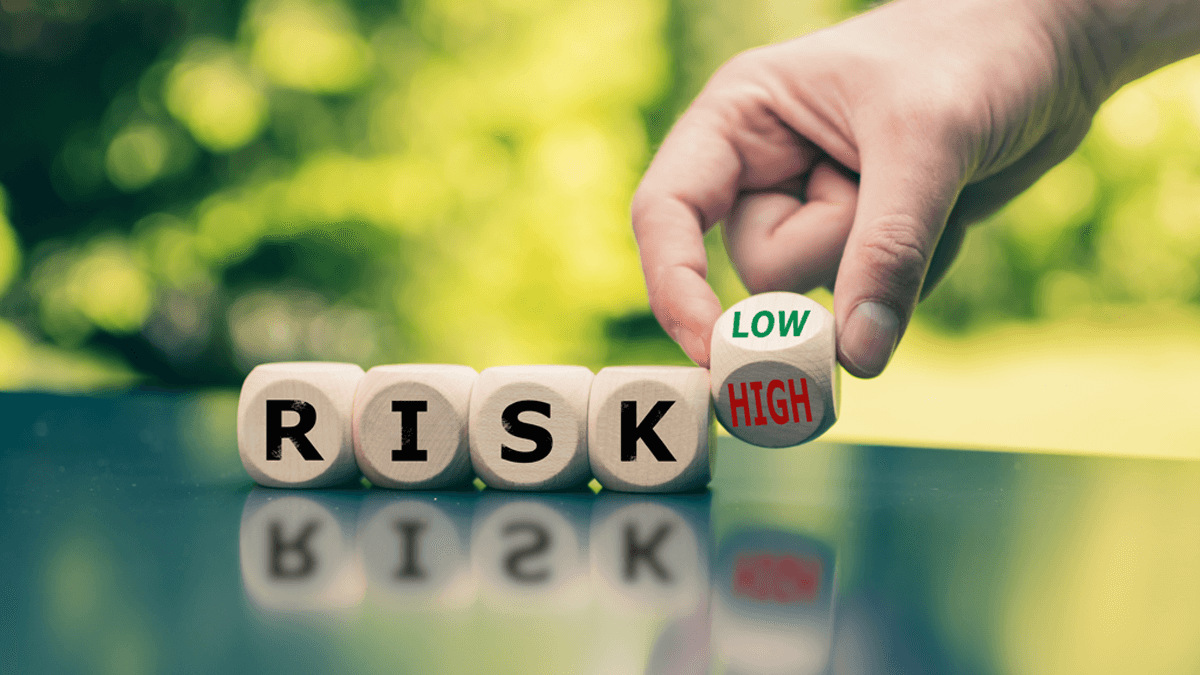
You know this 2×2 matrix: Projects in familiar markets & technologies are in the lower-left corner… the “core.” Most companies think projects outside this core are “risky.” But you can’t assign a level of “risk” because that requires assigning a probability of failure. And you simply don’t know enough to do this. All you can say is you are “uncertain.” Good news: Uncertainty can be resolved by laying out all your assumptions and investigating each to drive it to certainty.
To see how this is done, view the video at Project De-risking with Minesweeper
Leadership is less about motivating employees to create value for customers… and more about equipping them with the tools, training, and environment for doing so. A good leader provides and clears the path for innovation. When employees gain customer-insight skills and are free to practice them, they “rise to the occasion.” Sadly, some leaders’ net impact on innovation is more negative than positive due to their short-term actions, e.g. travel bans, hiring delays and spending freezes. They would boost innovation by staying home.
More in e-book, Leader’s Guide to B2B Organic Growth
How often have you heard this at a financial review meeting, “Well, one reason our revenue is lagging today is that crazy spending freeze we put in place last year”? If you’ve never heard this, it’s because leadership was fixated on last year’s first-order action (making the quarterly numbers), not the second-order effect (slower growth later). And they probably remain so today. If so, what does this tell us about a) our ability to learn from our mistakes, and b) our future growth prospects?
More in article, Stop Stifling B2B Organic Growth with 2nd Order Effects