It’s common to invest about half of a company’s resources on unsuccessful new products. It’s not that their people can’t find the right answers. They’re just being asked the wrong questions. Questions that are unimaginative, and—if solved—create too little value. Questions that are too obvious. Proper B2B interviews produce much better questions.
More in article, Are You Squandering R&D Resources?
When you turn up your thermostat, the temperature rises to the set point and quickly shuts off your furnace. Imagine if you had an 8-hour “feedback loop” before your furnace got the message. Even if you try new VOC approaches in the front end—but all your metrics occur after product launch—your feedback loop takes years. That’s no way to improve, is it?
More in article, 3 Problems with Innovation Metrics (Originally published in B2B Organic Growth Newsletter).
Imagine your business stopped innovating, your profits declined, and it is now budgeting time. To salvage next year, you’ll likely cut long-term costs, e.g. R&D or marketing, further reducing your ability to create high-value products. Next year, you’ll have even fewer options. This results in death or irrelevancy. If you’ve started this spiral, pull out quickly.
More in article, The Commodity Death Spiral (Originally published in B2B Organic Growth Newsletter).
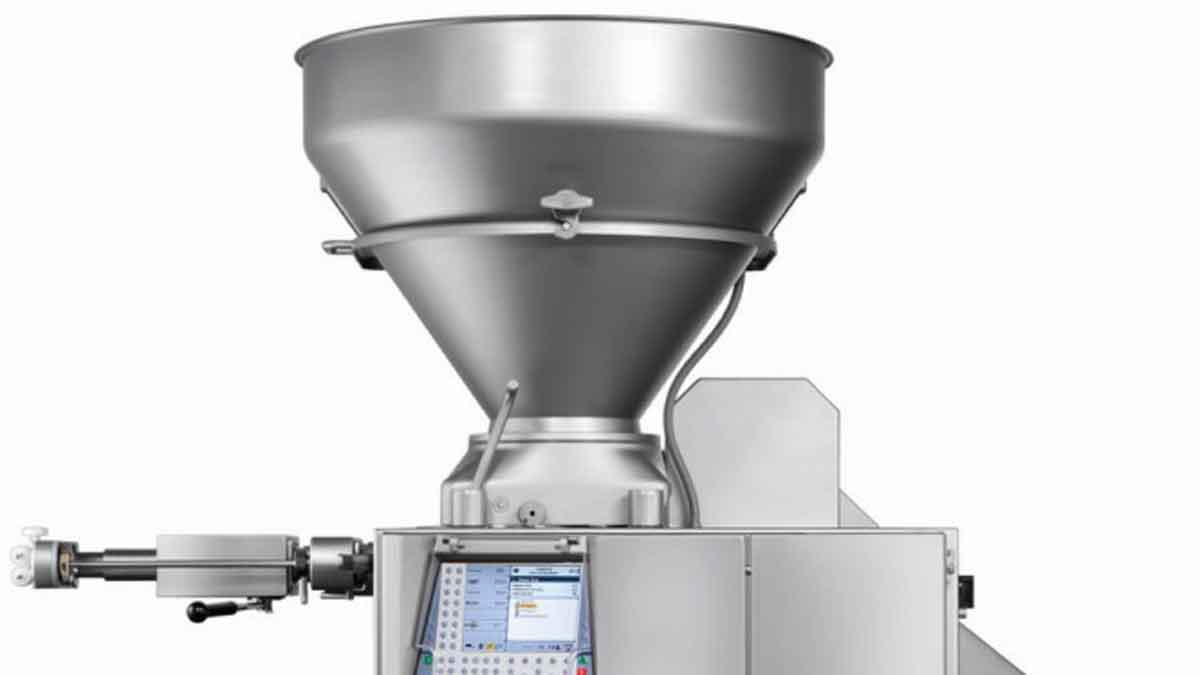
Most financial business reviews are like standing around the output die, exhorting the extruder to do better. But nobody’s checking the feed hopper. It looks like an intelligent meeting, discussing gross margins, price increases and growth rates. But these were predetermined years earlier, largely by your new products, what you put into the feed hopper.
More in article, Are You a Builder or a Decorator?
You shift resources “up” by investing manpower earlier in understanding market needs. This lets you be more successful later in developing solutions. You shift resources “out” when employees spend less time talking to each other… and more time directly engaging customers, through interviews and tours. Develop new skills for this, and create a new company culture.
More in white paper, Catch the Innovation Wave (page 6).
Your sales force should play a key role in innovation-focused interviews. But not by themselves. Unaccompanied sales reps seldom attract all the right customer contacts, and they’re not rewarded for the long time horizons required. Besides, market-facing innovation requires central coordination, since a single sales territory won’t contain all the needed prospects.
More in article, Why Your Sales Force Can’t Hear the Customer’s Voice (Originally published in B2B Organic Growth Newsletter).
Want to add employees who know your technologies and markets, can start work tomorrow, and cost nothing more? It’s easy: Just kill the dead-end projects that tie up half your resources. Free your people to work on projects your customers actually care about. It’s not hard to learn which projects to kill. In fact, strong project teams will halt weak projects on their own.
More in white paper, Catch the Innovation Wave (page 6).
If your new product development process starts with your ideas—instead of B2B customers’ desired outcomes—your new product may be an answer to the wrong question(s). You’ll likely a) miss important customer outcomes, or b) misinterpret the importance of the customer outcomes you have identified.
More in white paper, Timing is Everything.
If all customer outcomes in a market are either unimportant or already satisfied, you’ll see low Market Satisfaction Gaps. This is an over-served market, and there’s only one thing that makes these customers happy: Dropping your price. Race to more attractive markets and hope your competitors waste resources here. Have you identified your over-served markets yet?
More in article, Customer Interviews—By the Numbers (Originally published in B2B Organic Growth Newsletter).
Where else do you invest tens of millions of dollars in personnel, so that many can work diligently on answers to the wrong questions? If your firm is like most, one-half of your product development resources are working on projects that will be cancelled or fail to yield an adequate return. You can stop this innovation malpractice with the science of B2B customer insight.
More in white paper, Catch the Innovation Wave (page 5).
A fine innovation metric is the vitality index… % of total sales from new products (usually launched in the last 3 or 5 years). But it doesn’t tell you why your % is going up or down, does it? Sure, you can see which new products contributed… but you need to uncover the underlying reasons driving results. Otherwise you’re just watching from the bleachers.
More in article, 3 Problems with Innovation Metrics (Originally published in B2B Organic Growth Newsletter).
If your new product development process begins with “idea generation,” is it your idea… or your customers’? If you start with your idea, you probably won’t understand customer needs until the end… by seeing if they buy your new product. Why not flip your approach and start with customer needs? Unless you’d rather your R&D kept guessing at customer needs.
More in e-book, Reinventing VOC for B2B (page 4).
Problem 1—What’s the right question?—focuses on market needs. Problem 2—What’s the right answer?—is all about your solutions. Most companies put 90+% of project spending into Problem2, yet Problem 1 causes most new product failures. Hmmm… are you sensing a possible competitive advantage here? Will you explore it further? Will you seize it?
More in white paper, Catch the Innovation Wave (page 4).
The data are in, the studies are done, and—put simply—customer-engaging VOC improves your bottom line. One study on innovation by Booz & Co. found this: Suppliers who directly engage customers enjoy three times the profit growth vs. those that do not. Want huge profit growth? Engage your customers. It’s not hard, but it is a different approach… even innovative.
More in article, Why Advanced VOC Matters (Originally published in B2B Organic Growth Newsletter)